
From Strategy to Action: How to Build a 12-Month Grant Funding Strategy That Works

For many nonprofits, grant funding is essential, but the process often feels reactive. Deadlines appear quickly, opportunities feel urgent, and teams do their best to respond in real time. Over time, this approach can lead to missed opportunities, staff burnout, and proposals that feel rushed rather than strategic.
A 12-month grant funding strategy offers a different path. It creates structure, supports better decision-making, and allows organizations to pursue funding with greater clarity and confidence.
For executive directors and development teams already managing competing priorities, a plan is not an added task. It is a tool that helps reduce pressure and improve outcomes.
Why a Grant Plan Matters
In many organizations, grant activity is driven by opportunity rather than intention. A funding announcement is released, a deadline is approaching, and the team mobilizes quickly to respond.
While this approach can yield short-term wins, it often leads to inconsistent results and strain on internal capacity. Without a clear plan, it becomes difficult to prioritize opportunities, allocate time effectively, or build a cohesive funding strategy.
A thoughtful grant funding strategy plan provides structure and direction, helping organizations:
Focus on opportunities that align with their mission and capacity
Avoid last-minute proposal development
Improve the quality and competitiveness of submissions
Balance workload across staff and timelines
Strengthen relationships with funders over time
Most importantly, it shifts your approach from reactive grant seeking to strategic funding development.
What a 12-Month Strategic Grant Strategy Includes
A common misconception is that a grant funding strategy needs to be complex or highly technical. In reality, the most effective plans are clear, focused, and practical. The purpose of a grant funding strategy is to create a shared understanding across your team of what you are pursuing, why it matters, and how the work will be managed over time. It should serve as a living tool that supports decision-making, not a document that sits unused. Key components of a 12-month grant funding strategy include:
1. Priority Programs and Funding Needs
Before identifying funding opportunities, it is important to have clarity on what your organization is trying to fund. Too often, organizations begin with the grant opportunity and attempt to shape their work to fit the funding. A more effective approach is to start with your programs and priorities, then identify funding that aligns. This ensures that your grant efforts are grounded in your mission and positioned for stronger outcomes.
Ask:
What programs need urgent financial support?
Where do we have the strongest outcomes or data?
What initiatives are ready to be funded?
2. Targeted List of Funders
The number of available grant opportunities can feel overwhelming, particularly when teams are under pressure to secure funding. Rather than casting a wide net, it is more effective to focus on a smaller group of funders that are well aligned with your organization’s mission and vision. This allows for deeper research, stronger proposals, and more meaningful funder relationships.
A targeted approach also helps your team use time more efficiently and avoid pursuing opportunities that are unlikely to be a good fit.
This list should include:
Foundations
Corporate funders
State or federal opportunities (if applicable)
The goal is to prioritize fit and alignment over volume.
3. Grant Calendar
Even the most well-researched funding strategy can fall short without a clear timeline for execution. A grant calendar brings structure to your plan by mapping out key deadlines, preparation periods, and reporting requirements across the year. It allows your team to anticipate workload, plan ahead, and avoid last-minute scrambles.
For organizations managing multiple grants, a centralized calendar is especially valuable in maintaining visibility and coordination.
It should outline:
Application deadlines
Targeted initiative in need of funding
Funding amounts
Expected award timelines
Reporting requirements
A well-structured calendar allows your team to see what is on the horizon so they can plan accordingly, rather than reacting to deadlines as they arise.
4. Internal Roles and Responsibilities
Grant work often involves multiple people across an organization, including leadership, program staff, and development teams. Without clear roles, it can be difficult to coordinate timelines and expectations.
Establishing responsibilities early helps streamline the process and reduces confusion as deadlines approach. It also ensures that each component of the proposal receives the attention it needs. Clear roles support accountability and help prevent bottlenecks during critical stages of development.
Define:
Who will coordinate the proposal timeline
Who is responsible for drafting proposals
Who is responsible for drafting the budget
Who provides program input
Who reviews and approves submissions
Who will oversee program implementation
Who will be responsible for post-award grants management
5. Core Grant Materials
One of the most time-consuming aspects of grant writing is recreating the same core content for each new opportunity. Developing key materials in advance allows your team to work more efficiently and maintain consistency across submissions. It also creates a stronger foundation for responding to opportunities with confidence.
Organizations that invest time in building these materials often find that proposal development becomes more manageable over time.
These may include:
Program descriptions
Logic models
Budgets and budget narratives
Organizational overview language
Evaluation plans
How to Build a Plan Without Overwhelming Your Team
For organizations already managing full workloads, the idea of creating a strategic grant funding plan can feel like one more responsibility. The goal isn't to build a perfect system overnight, but to take manageable steps that improve clarity and coordination. Starting with a simplified plan allows your team to build momentum without adding unnecessary complexity. A practical approach focuses on what is most relevant and achievable in the near term.
Start small:
Focus on the next 6–12 months
Identify 10–15 aligned opportunities, not 20+
Build a simple calendar using tools your team already uses
Prioritize clarity over perfection
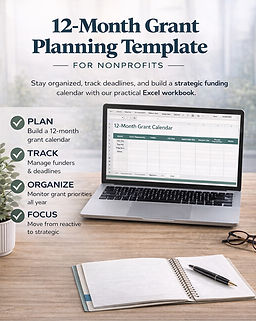
Even a basic plan can significantly improve how your team approaches funding. This template can serve as a helpful starting point.
Common Pitfalls to Avoid
Even with strong intentions, organizations can encounter challenges when building and implementing a grant plan. Many of these challenges stem from overcommitment, lack of alignment, or insufficient coordination across teams. Recognizing these patterns early can help you adjust your approach and avoid unnecessary strain. A well-structured plan creates guardrails that support better decision-making and more sustainable workflows.
As you build your plan, keep an eye out for these common challenges:
Overcommitting to too many opportunities
Pursuing funding that does not align with your mission
Underestimating the time required for proposal development
Lack of coordination between program and development staff
Waiting too long to begin preparation
A Practical Tool to Get Started
For organizations that are ready to move from planning to action, having a structure in place can make the process much more manageable. While cloud-based platforms are ideal for organizations managing several state and federal grants, a simple spreadsheet can help teams get organized and moving in the right direction.
To support this work, SJR Nonprofit Solutions has developed a 12-Month Grant Planning Template designed to help nonprofit teams organize funding priorities, map deadlines, and clarify roles. This template reflects a portion of the grant planning process used in our collaborative Grant Readiness work. While it provides a helpful starting point, many organizations find that completing the template raises important questions about prioritization, capacity, and strategy.
This tool is especially helpful for organizations looking to bring more clarity and coordination to their grant efforts without adding unnecessary complexity, while also offering a pathway toward a more strategic approach to funding.
If you’re looking to move beyond the template, a Discovery Call can help identify next steps that fit your organization’s goals and capacity.
Schedule a Discovery Call to explore how to get started.


